October 22, 2011

WHO'S THAT LADY? Greta Garbo or...


Inge? Inge who?


Greta Garbo, screen legend. One of the most beautiful, photogenic and famous women in the world:--my past, present and future inspiration.


Since I hate doing User Profiles, let's  have some fun with rare stills from Garbo's amazing career, her gorgeous face and, some factoids about moi: Garbomaniac par excellance.


Greta Garbo was born on September 18th. Me--- September 1st.  Zodiac sign: Virgo, sign of the thinker. I spend a lot of time musing, then go off and ponder some more.  I need a rehab program for  excessive thought, but it wouldn't take. I'm hooked.


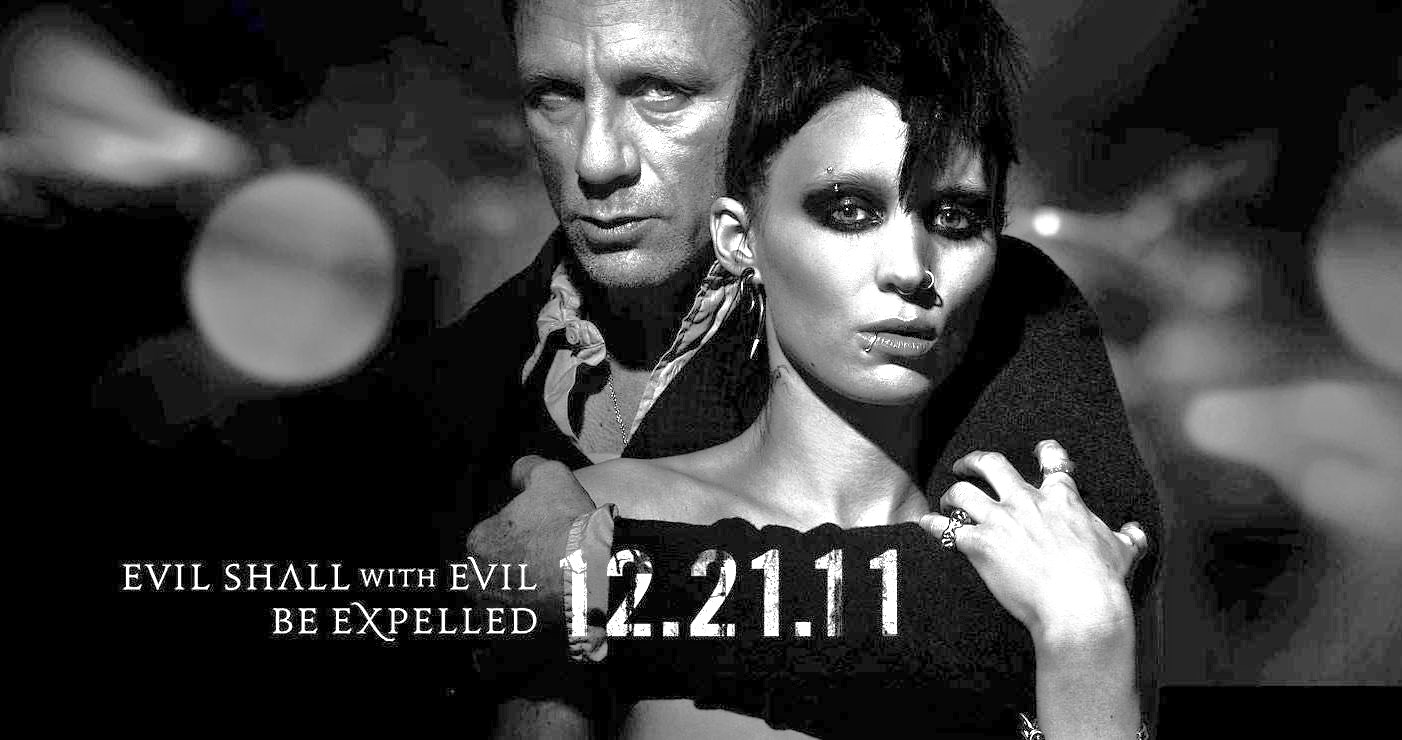
Like Lisbeth Salander, in  The Girl With the Dragon Tattoo, I have a photographic memory---both a blessing and a  curse. I seldom forget any thing or any one.  Cross my heart, I only use my powers for good.


I adore children...


Love art...


Artists...


Flowers...


Music...


and Writing.


Food and nutrition are vital.


Film fashion is my passion, and,
not-so-little black dresses tickle me pink.


I study the making of films: Cinematography


Directing, Acting and setting the mood with Music


I collect style and design materials from the movies.


Hair and make-up must be perfect before the shutter clicks or the camera rolls.


AND...


When all is said and done--I love the sea.


******************************

Above stills:

*   December 1934 PHOTOPLAY Cover of Greta Garbo: Earl Christy,
*   The Girl With the Dragon Tattoo, 2009 poster,
*   Stills from classic Greta Garbo films, including the ones below:  


The Temptress, 1926


Flesh and the Devil, 1926


A Woman of Affairs, 1928


The Single Standard, 1929


The Kiss, 1929


Inspiration, 1931


October 19, 2011

NORMA TALMADGE


Norma Talmadge-December 1929


Norma Talmadge was one of the brightest stars during the silent era. She is rumoured to have been the inspiration for Norma Desmond in the film noir classic, Sunset Boulevard as well as the Lina Lamont character in Singin' in the Rain. These are dramatic and comedic depictions of fading stars. Norma Talmadge made films from early in the century and her star shone brightly until she retired at the height of her fame. 


Her dark-haired bob and creamy complexion made her one of the most photogenic stars, and her acting abilities one of the most popular. She was dressed by top designers of the day, including Lucile, Lady Duff Gordon. This was before the studios hired costumers to design wardrobes for the top stars. Actresses like Gloria Swanson often chose and wore gowns from their own closets, and, the results were often stunning!

Norma influenced style from the late 'teens through the 1920s. Below left, a movie magazine cover of 1921. Right, a beautiful portrait by Albert Vargas.


Glamorous, poised and elegant, with star power  and attitude to burn, she was the diva of divas. Below right: bejewelled and wrapped in marabou feathers.  To the left: precious and priceless pearls topped with the de rigeur cloche hat of the '20s. 


Her raised profile was widely copied by everyone from Joan Crawford to an up and coming young Swedish actress named Greta Garbo:  chin uplifted with a regal, haughty air. That look WAS Norma: it highlighted her lovely profile to its best advantage. F. Scott Fitzgerald's description of Jordan Baker in The Great Gatsby reminds one of Norma.  "...her chin was raised a little, as if she were balancing something on it which was quite likely to fall." 


It was she who, in 1927, accidentally walked into wet cement at Graumann's Chinese Theatre to begin a cinematic and pop culture ritual we still use today. Hands and feet on the sidewalk at Mann's was a Hollywood honour long before a star on the Hollywood Walk of Fame.


As all lovers and collectors of Paper Dolls know, for an actress or celebrity to be the subject of one is a great honour. Below,  "Norma Talmadge" cut-out dolls with costumes from early film roles: The Social Secretary (1916) and The Heart of Wetona (1918).


Movies were a Talmadge family affair. Older sister Natalie was married to Buster Keaton. Sister Constance was a brilliant and popular comedienne of the day. Below, Connie, on the right, and Norma ham it up in the same "Queen's Chair"  (note the uplifted chin on Norma).


 The Talmadge sisters were a force to be reckoned with.  Sadly, many of both their films are "lost"--allowed to deteriorate and simply crumbled into dust.  Luckily, today organizations like the AFI (American Film Institute) and others are working to preserve and even reconstruct some of these classic and historic films.


Below, a stunning shot of the sisters (minus Natalie) at the height of their fame, circa 1926, wrapped in antique shawls.


Like many silent actors, Norma couldn't successfully make the transition to talking pictures. Not that her voice was unpleasant, but, it did register a Brooklyn-ish accent, which made playing certain roles difficult and, just like in Singin' in the Rain, laughable.
 
No one could fake British royalty or European aristocracy with a Flatbush accent.  John Gilbert and many others met with the same fate. In Gilbert's case, his voice didn't quite match the machismo of his screen image.

Norma's predicament was fodder for PHOTOPLAY, whose cover she had graced many times at the height of her stardom.  Still, she gave it the old school try.  She fared well in 1929's New York Nights and proved that her voice was pleasant enough.  Her next film would not be as kind.


In 1930, after sister Norma's film, DuBarry, Woman of Passion, vocally demanding, opened to bad reviews, the ever-witty Constance sent a Telegram saying "Quit pressing your luck baby. The critics can't knock those trust funds mama set up for us." 
 
Shortly afterward, the film career of one of the brightest lights and pioneers of old Hollywood retired--at the height of her beauty and popularity.  Number 13 or not, the microphone had no mercy.

*************************


October 18, 2011

IT'S A NICE DAY FOR A...BLACK WEDDING???


Vera Wang's "Witchcraft" Collection

This past weekend, designer par excellance, Vera Wang, sent shock waves through the fashion world by showing seven black gowns in her Fall, 2012 Bridal Collection.  

Dubbed the "witchcraft" collection, these exquisitely cut and draped gowns would stop the show anywhere:


So, if the bride-to-be has a goth bent, or if you're just looking for a fabulous black dress, (at couture prices of course) Vera Wang's your girl for 2012.


October 13, 2011

PUSSYCAT, PUSSYCAT, Where Have You Been...?


NEW YORK CITY MUSEUM OF ARTS AND DESIGN:
SEPTEMBER, 2011


It's 9:00 PM, and I'm seated, not surprisingly, in a predominantly male audience to see a vintage 1965 Russ Meyer exploitation film--with respect to its influence on fashion. Hell has indeed frozen over:


Three go-go dancers (Tura Satana; Haji; Lori Williams) cut loose in the Mojave Desert, behind the wheels of some very cool cars. And, since they are dancers of the Californian persuasion, their clothes are stylish and just bordering on 1960s mod: crop tops; hip-hugger pants; what we now call skinny jeans; knee high boots and so much more. These go-go girls have got it going on, style-wise. 

Alas, they, especially their leader (Tura), are a tad violent. This is nicely explained by the narrator in the first few moments of the clip below.  This exploitation movie has a Mission Statement. It just gets better and better...


This film's sexuality is primarily verbal innuendo and dependent upon stilted and campy dialogue. Haji's character has a crush on Satana's but all we see are her disappointed, jealous glances. The most endearing of the three, Lori Williams, below, is the blonde cheerleader type, and the other two have little patience with her.


Lori Williams in crop top, belted shorts and knee-high boots


In this original film poster, (the late) Tura Satana demonstrates her killer instinct after the girls meet up with a young man and his girlfriend.


The violence is explicit and gratuitous. Satana's character is a cigarillo smoking, leather gloved, tough girl who literally, takes no prisoners--excepting the hapless girlfriend, because she is a witness to Tura's crime. 


Poster featuring Tura Satana and hyping female violence


At a gas station in the desert, the girls hear of a nasty old man in a wheelchair, who reportedly has a lot of money hidden on his property.  Satana's character sees this as a golden opportunity and off they go.


The beautiful Tura Satana, who passed away earlier this year


They discover that the man has two sons, one of whom is referred to as "Vegetable", seemingly the result of some trauma involving the nature of the departure of his mother. Vegetable has a buff, body builder physique but the mind of a child.


From left to right:  Russ Meyer's Porsche; Haji and Lori Williams


The old man has his own agenda, lusting after the girls' hostage, (played by Susan Bernard) who is frequently sedated by Satana. Still, she eludes Lori Williams, her keeper, often enough for the prerequisite shots of her running through the Mojave in a two piece swimsuit.


Artist Josh Agle's rendition of the film


The other son catches the eye of Satana, and, there is an awkward sexual encounter between the two.  Tura's far more interested in finding the hard, cold cash purportedly hidden on site. 


Smiles as bright as the Mojave sun, and draped across the boss's car


Once the money is discovered, the film draws to a violent and unexpected, if somewhat justified, conclusion. 


Never too busy for a little cheerleading practice


To say that this movie has a cult following is an understatement.  As with "Rocky Horror..", people rhyme off dialogue, know the cars, own several prints, have been to midnight screenings and utterly worship the late Tura Satana.

The wardrobe was oddly fashion-forward for 1965, as was the hair and make-up.  As exploitation and other Russ Meyer films go, it deserves its status. The location shots, the fast cars, and the campy humour make it an eminently watchable movie--even after all these years.


VANITY FAIR'S FASHION IN FILM
September 9 -11, 2011
Museum of Arts and Design
New York City


* Creme de la Creme, is powered by the Awesome, Inc. Blogger template.  The Black Lace Background was designed by myself.

NYC FILM FEST: CULT CLASSIC #1 - "DIVA"


DIVA  (1981)


This lavish and colourful 1981 French film by Jean-Jacques Beineix, was the next to last "Fashion in Film" offering.  The central plot, which has sub-plots like Jupiter has moons, involves a young postman named Jules (Frederic Andrei) and his obsessive crush on an opera Diva named Cynthia Hawkins (Wilhelmina Wiggins Fernandez).

Diva Hawkins, has never allowed her voice to be taped, but at one of her performances, Jules manages to do just that, and, steal her off the shoulder metallic gown from the dressing room as well.


The audio tape of Hawkins' breathtakingly beautiful Aria is mixed up with one incriminating a Parisian police official as the sadistic crime boss he is. The gangster/cop dispatches his goons to retrieve the tape while Taiwanese gang members frantically hunt for the Aria tape in order to make bootleg copies. 


Diva Cynthia Hawkins sings her aria in the soon-to-be stolen gown


Young Jules unknowingly transports the mobster's tape on his motorbike and meets up with gangsters, philosophers, muses and, at long last, his Diva--along the explosion-packed and car chase filled route.


A very 1980s colour scheme: pearl grey and pink--peignoir for a Diva


Feeling remorse, Jules returns the performance gown to Cynthia, with whom he is ever more in love.  Charmed by his sweetness, Diva Hawkins is far more concerned about her voice going public on audio tapes, and, ponders what will become of her career and personal life.

In bold ethnic stripes and jewellrey, Diva Hawkins chats up Jules


This film was part of the cinema du look movement, marking a return to "slick commercial style" (Wikipedia), after  the grittier realism of French cinema in the 1970s. 

Another of DIVA's bright, imaginative posters


DIVA may be cinema du look, but I found it overly long and burdened by unnecessary characters and the attempted inclusion of too many film genres. As the opera Diva, Wilhelmina Fernandez is fashionably turned out.  All in all, it is a stylishly made film which has become a cult classic. 


October 08, 2011

FILM FASHION FEST: Day Two


Another bright and shiny Big Apple morning. Three fashion-oriented films were on the menu, so shopping and photo-ops had to be appetizer-sized only. The main courses would start at 2:00 p.m


.


French cuisine for Lunch:

LES PARAPLUIES DE CHERBOURG (1964)


The Umbrellas of Cherbourg, by Jacques Demy, is a musically backdropped romantic drama set in 1950s France.  It boasts a score by Michel Legrand, as well as starring a very young and unbelievably beautiful Catherine Deneuve.


Madame Emery (Anne Vernon) and her daughter, Genevieve (Catherine Deneuve) run a struggling umbrella shop in the seaside port of Cherbourg. Genevieve is in love with a local mechanic, Guy, (Nino Castelnuovo), who is inevitably called to serve the mandatory two year conscription in Algeria by the French Army, leaving her brokenhearted and pregnant.


Catherine Deneuve and Anne Vernon--plus some amazing art direction 


The film is beautifully photographed, with dull, rainy exteriors of the Normandy coastal town in sharp contrast to colourful and visually stunning interiors. The remastered version of this film is so striking that background wallpapers seem to belong in the credits. Scenes with the two ladies at home feature resplendent wall designs in vibrant, almost neon hues. Even the furnishings are ornate and decorated with curlicues and cupids.

Misses Deneuve and Vernon, not to be outdone by set design--look bright, sharp and well-dressed by 1964 standards. Mad mod fashions had not yet erupted, so the Jacqueline Moreau costumes are crisply tailored, knee length and demurely high necked.


Genevieve, Mom, and colour, colour everywhere


Michel Legrand's score is wonderful, but, every line in this movie is sung--at full volume and in French (with English subtitles, of course). The theme song "I Will Wait For You" which would become a hit single, provides some relief from the occasionally overwhelming effect of the chanted "lines".


Madame Emery, while dealing with the financial woes of her shop, comforts the long suffering and in-waiting Genevieve as much as she can.


Great "Think Pink" robe, but, the winner is:  the wallpaper!


At the bank trying to trade her heirloom jewellery, Madame Emery meets a man who has admired her daughter from afar for years. Genevieve's pregnancy does not affect his love for the pretty young girl and, matters take their course.


In pretty pastel coat, Catherine Deneuve waves goodbye.


From a fashion point of view, the film illustrates late 1950s to early 1960s  subdued elegance. Anne Vernon wears mostly tailored suits while Catherine Deneuve, in a younger look, smart dresses with matching cardigan sweaters. The rainy Cherbourg demands a classic trench coat or two. Ms. Deneuve sports youthful hairdos, pulled back with bowed hairbands.

"The Umbrellas of Cherbourg", while not my favourite Michel Legrand musical, is a sweet love story which still has relevance today.


British High Tea:

X Y & ZEE (1972)

Sexy and stylish 1970s London, with Elizabeth Taylor, Michael Caine and Susannah York doing the prerequisite "swinging". Does it get any better?


The original film Poster


At a chic party hosted by socialite Gladys, (Margaret Leighton), married architect Robert Blakeley (Michael Caine) meets a soft-spoken fashion boutique owner named Stella, (Susannah York).  Robert's flamboyant and feisty wife Zee, (Elizabeth Taylor) notices the attraction and sets in motion her plan to deal with the situation unfolding before her (stunning violet) eyes.


Michael Caine eyes Susannah York's pendant; Margaret Leighton looks on


In the early 1970s a hemline battle raged between mini, midi and even maxi.  One unfortunate outcome of this was "hot pants". They were essentially short shorts for day wear. The (shorter on top and long in the back) "shag" haircut, seen on both Elizabeth Taylor and Susannah York, below, was THE do of the moment. Clothing styles had polarized and, no better example exists than in the Beatrice Dawson designed wardrobe for this film. Susannah York wears long, softly-draped (designer) Jean Muir type dresses while Liz Taylor sports flashy hot pants, caftans and ponchos.


Elizabeth Tayor in poncho and hot pants; Susannah York in soft blue dress


The plot involves Zee's desperate attempts to lure her wandering husband back to the nest, simultaneously befriending his now-mistress, Stella.  Zee discovers a lesbian affair in the widowed designer's past. While ostensibly comforting a weepy Stella, she initiates a  sexual liaison. There are hints that a menage-a-trois will ensue, since Robert can't seem to decide between the two  very different women.


Liz in a gorgeous gold medievally-inspired dress


While this movie didn't make any of the critics' top ten lists, it remains a fascinating little time capsule. A dizzying kaleidoscope of stylish, if excessive, social and sexual mores that blossomed in the early 1970s.


Midnight Supper in Manhattan


Eyes of Laura Mars, 1978:


Fashion photographer, Laura Mars, has the reputation of pushing the envelope with sexually explicit, violent images in her work.  At a retrospective and book launch in SoHo she meets NYPD detective John  Neville, played by Tommy Lee Jones who, after viewing her exhibited work, brusquely informs Laura that her pictures mirror real crime scene photographs:  of unsolved NYPD murders.


The people closest to Laura begin to be murdered in a horrifying way, involving their eyes. To add to her terror, she "sees" these crimes as they are taking place, (through the eyes of the murderer) as though they were psychic visions.


For the sophisticated Manhattan characters, especially the perfectionistic Faye Dunaway, Academy Award winning costumer Theoni V. Aldredge designed a feminine, softly-tailored wardrobe. Laura Mars wears long and leggy skirts, slit way up each thigh.  Ms. Dunaway's hair was an auburn shade which set off and blended beautifully with the palette of autumn foliage hues contrasting with bold jewel tones of teal, claret and burgundy.


Laura Mars, with the help of John Neville and the NYPD, tries to cope with the mounting number of murders, all of which she sees as they are happening. She herself is a suspect, as are models, assistants and even her chauffeur. The case is deadlocked.


Determined to keep working, Laura sets up a large "shoot" at her Staten Island studio, a sprawling warehouse.  While models and stylists prep the scene, she has a vision of the area right behind herself and realizes that she is the next intended victim.


Frozen with fear, Laura contacts Detective John Neville, with whom she has fallen in love.  He assures her that they will very soon go away together to escape the serial killer--still at large.

Eyes of Laura Mars is a feast for the senses. Stunning real-life fashion models strut around in floaty, barely-there fashions of the late disco era. Laura Mars dresses, works and lives in artistic affluence. 

If one cares to see it, there is a deeper message:  the Laura Mars photos are strikingly similar to Helmut Newton, and other top fashion photographers of the day, who specialized in skirting the perimeters of convention.  Laura Mars' works inspire a terrible killing spree.   Should art be morally accountable for the emotions it encourages---even creates?


NEXT TIME...the last day: "Diva" and "Faster, Pussycat! Kill! Kill!"